Wejdan Majed Al Malki
First woman to represent Qatar in show jumping
In this interview, we speak with a pioneering Qatari athlete whose journey is defined by passion, perseverance, and resilience. Wejdan Majed Al Malki is a true trailblazer in Qatar’s equestrian world. She made history as the first Qatari woman to compete in the 2006 Asian Games as a show jumper. Today, she continues her journey that is now dedicated to dressage, aiming to qualify for both the Asian Games and the Olympics.
Wejdan’s story is a powerful testament to resilience in the face of adversity, a journey shaped by unwavering commitment, faith, and a deep connection to purpose. It’s about pursuing your passion even when the path is uncertain, finding strength in challenges, holding on to faith and staying grounded in family and values. So, who is Wejdan Majed AL Malki?
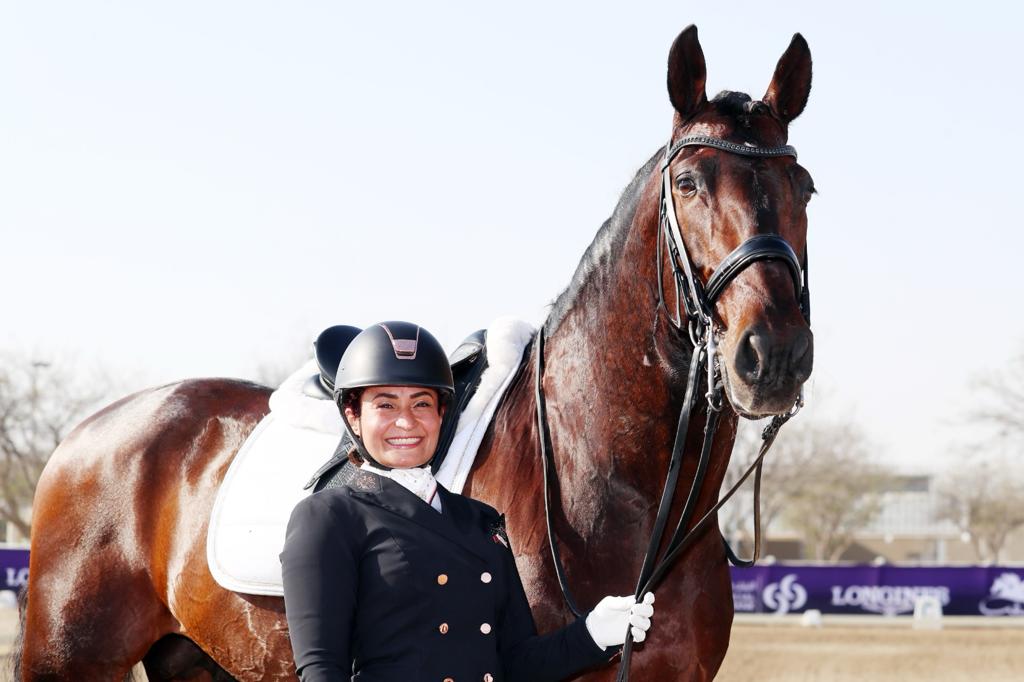
I am a Qatari athlete competing in high-level dressage and working towards qualifying for the Asian Games and the Olympics. I was the first Qatari woman to compete in the 2006 Asian Games as a show jumper. Currently, I am a full-time athlete and a trainer. I have a bachelor’s degree in environmental biology and a master’s degree in marine environmental protection from the University of Wales in the United Kingdom (UK). I worked at Shell Qatar before fully dedicating myself to dressage, which is my true passion. I am also a scuba diver, and I love nature and dogs.
You studied science and then worked a corporate job. What made you shift to dressage?
Since I was a child, I have had two passions: animals, especially horses, and nature, especially the sea. I believe I inherited these passions from my late father, may Allah have mercy on his soul. His side of the family were pearl divers, so the love for the sea runs in our blood. My father, who also loved horses, encouraged me to ride horses, and he was my biggest supporter. My mother focused more on the academic side of my life, while my father took care of the sports side, and it was a great balance between the two.
Can you tell us more about your experience participating in the 2006 Asian Games?
The 2006 Asian Games marked my introduction to dressage. When I came back from the UK after finishing my master’s in 2005, I was approached by the Qatar Equestrian Federation to compete in dressage in the 2006 Asian Games. Before that, women were not allowed to compete in dressage and all my previous shows were in show jumping. So, I was happy to know that the rules have changed, and Qatari women can now compete in dressage. I believe Her Highness Sheikha Moza Al Misned had a big impact on changing these rules, and I am grateful for the opportunities that those changes created.
However, at that time, the problem remained, which is that I did not have experience in dressage, but the Federation said they would take care of the training. I was trained in Germany, at the same place that I am training in now. At that time, my father went with me as he was the team manager. It was a tough ride because my teammates and I did not have prior experience in dressage, so we had a lot to learn.
The 2006 Asian Games marked a new phase and a total shift in my life. It was an unforgettable experience; add to it the pride that I felt as the first Qatari woman participating at a continental level. However, dressage was a young sport in the region that did not attract a lot of attention, and whatever attention it attracted, it died quickly after the Games, so it was hard to carry the banner of dressage alone with no outside support. After the Asian Games, I worked at Al Shaqab for four years, with the last two years of that as the Deputy Director, but then I decided to focus on my career at Shell. Unfortunately, that meant that I did not have a lot of time for horses
What motivated you to become a full-time dressage athlete?
In 2016, I did a training workshop with Rafeel Soto in Spain. He is a Spanish Olympic athlete, and he encouraged me to go full-time, and he told me that I was wasting my talent. He advised me to buy some horses, train, and start competing, so he is the one who sowed the seeds in my head.
Qatar faced the blockade in 2017 when I was promoted to a regional manager in Shell. A position that, unfortunately, I could not take due to the situation created by the blockade. Shell tried their best to work their way around the problem, but still, it did not work out. I lost my spark for that job. So, at that moment, I was forced to sit down and think about what I wanted to do next. There were other ways to keep working at Shell and pursue dressage in parallel, but that would be hard with all the travelling that I would have to do. It will be fine for someone who wants to do dressage as a hobby, but not someone like me, who wants to be able to compete at high levels.
Another motivation was to show what Qatari athletes can do, especially since the country was establishing itself more and more in the sports world. Add to it that no person in the Arabian Gulf has ever made it to the Grand Prix. That is when I went to my father and expressed my desire to become a full-time athlete, as I felt that all the doors were closed with the promotion. I decided, after taking my father’s blessings, to give this new journey a try for five years and see where we reach. Having a deadline was important as I did not want to waste my time.
How did you embark on this new journey as a full-time athlete?
I started that journey in Spain and bought myself a few horses that I still have. My mother had her concerns about this shift in my life, and my father did too, as I was leaving a high-paying job to become a full-time athlete, a job that might not pay well. There were some challenges in terms of training, too, since we did not have high-quality training in Qatar. It meant leaving the comfort of my home and country, but that was the only way to become the athlete that I wanted to become. It needed that level of dedication.
So, Europe was my destination. I started in England with two horses and started competing. Within six weeks, I participated in a competition and won first place! I joined another competition and won first place again! I ended up qualifying for the Jakarta Palembang Asian Games in 2018 but sadly missed a few deadlines and was not able to compete in it. Nonetheless, that was a very encouraging start for me.
By chance, I met Samantha Francis, who loved the journey that I was on. She offered me the horse she was selling, Jacaro, who I was not going to be able to afford. However, she liked what I was able to do with Jacaro and she did not want to sell him to any rider except to someone worthy. So, I had an agreement with her that if I moved from where I was training at that time, to train with her with my other two horses, and take care of the training and stable expenses, then Jacaro is all mine! This happened at the beginning of 2020, and Sam was my first step towards the Grand Prix.
I moved from the midlands to her stables in the south of England with my two other horses. After training for some time, I was about to take the first test that would qualify me for the national Grand Prix. Unfortunately, my father got sick, and I came back to Doha. He told me, during his last days, to keep working because he believed I would do it. He passed away shortly after that. His passing made me even more determined to become a better rider because my father was my biggest supporter, and I vowed to see it through for him.

I won second place in my first national competition after heading back! I competed in another national and got second place again. This is when Sam had a discussion with me about going international, so we agreed that I would move to Germany with my three horses, and we trained there with Judy Reynolds.
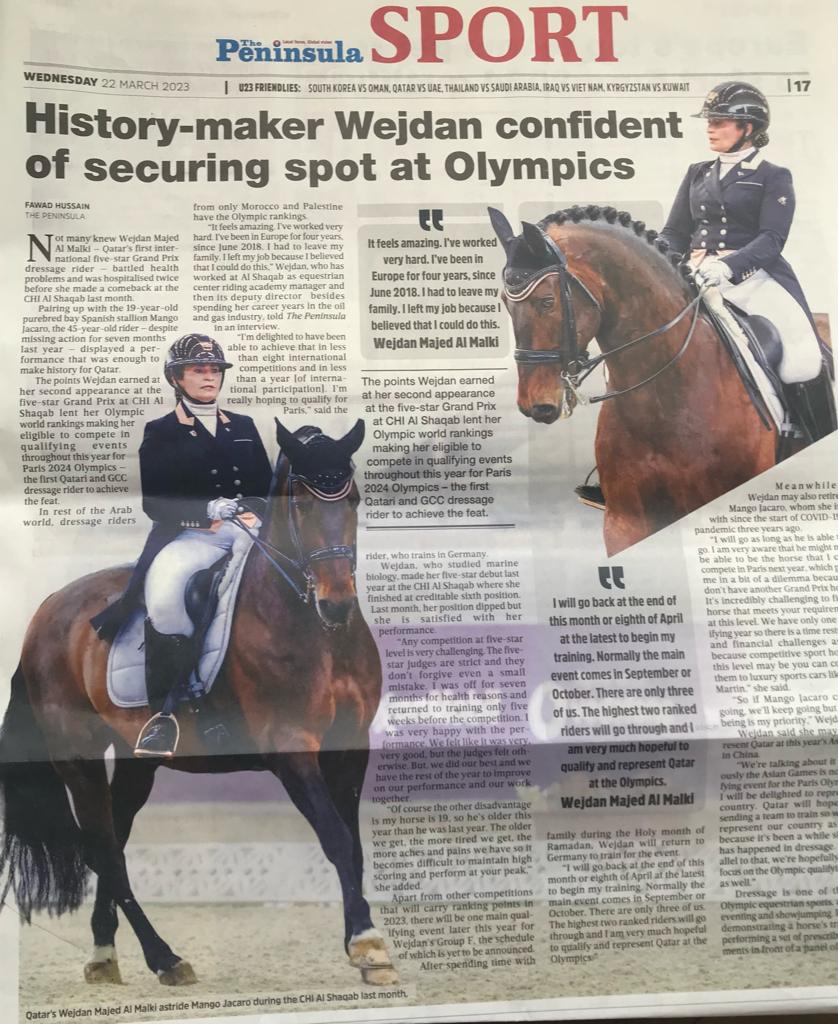
I started training with Judy and went to the first national show in Germany. Nationally, in Germany, I scored my personal best which is almost 70%. Then, I went international and scored above 64% almost all the time, so we qualified for a 5-star show at Al Shqab! This made me the first Qatari woman to compete at this level. We did not do well in it, but it was amazing to be there, making history, and the rest is just a part of the journey.
What makes training in Germany different from training elsewhere?
In Germany, I am the one who takes care of my horses. I wake up at dawn to get started on my chores and get the horses ready for a day of training. Germany is the place to be if an equestrian wants to improve and compete at high levels. This is evident to me in the way that the horse that I got in 2018 improved while training there. The horse had some health issues, and unfortunately, I could not help him go back to his prime. However, after about four months of training in Germany, we participated in a number of national competitions, and we scored a personal best of almost 67% and was placed eighth at the podium.
Then, we were invited to go to a competition in Riyadh, which is at the level of the Asian Games, and we scored third place there. So, despite the horse’s old age, I can clearly see how he was able to improve and get sharper with the training in Germany. The competition is fierce there, forcing you to come out of your comfort zone and improve.
Living abroad has its challenges. It is hard to be away from family for sure. The weather in Germany is not the greatest, but that is the price for the goals I want to achieve. All this is a part of the journey. Qatar is improving in terms of equestrian training, as I do work with the Qatar Equestrian Federation, but Germany is where you want to be to achieve higher levels. Of course, it is a hard path, but for now, this is what I choose.
How do you mentally prepare for your competitions?
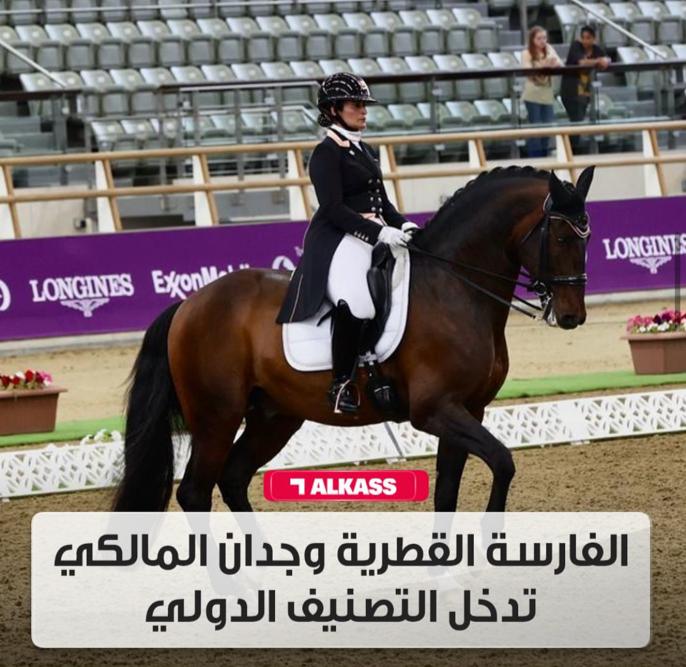
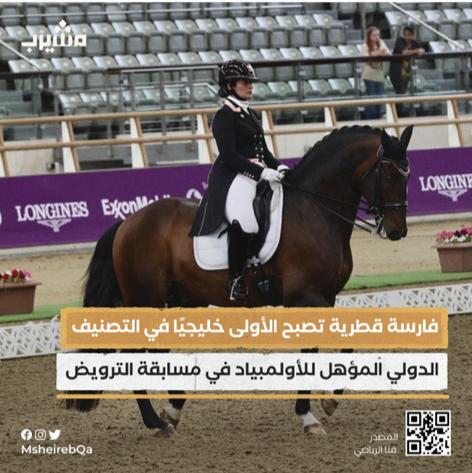
I was not very nervous when I was competing in England, maybe because the competition was smaller. However, the feeling of competing in Germany was one full of terror! I was very nervous in my first competition. As I said, Germany is the heart of dressage, and you are competing with great athletes. My trainer told me that it is not about beating the great players, but it is about establishing a standard for yourself, a checkpoint that you can reference to see your improvement, and that is hard. Dressage is a dance between two beings, the rider and the horse. The horse has a mind of its own, its mood shifts, and health issues, and so much more that you cannot control. It is then the rider’s job to manage horses and work with the different personalities of different horses. My late horse, Jacaro, was a showman; he loved performing and he did not need any encouragement from my side. He was a stallion, and he loved to show it to everyone. However, one of my current horses gets performance anxiety. I must give him a pep talk and hold his hands as we perform, while the other one is just moody. One day he is great, and other days, he might not be in the mood.
As for my anxiety, I like to distract myself from it by focusing on my horses. I try to make sure that my horses are taken care of so that both of us can perform our best. That usually takes away my negative tension and turns it into a positive force. Other ways to cope with my anxiety include a good diet, lots of breathing exercises, and working with my horse as a team.
How is it like to train for big competitions?
The Olympics is a different beast than the Asian Games. The dream journey to the Olympics started with Jacaro, but sadly we lost him before the qualifications. Now, I have two horses. Poppy, who is confirmed to be at Asian Games level, and with whom I just competed at Riyadh. My other horse is Pumpkin, but he is at the level of Grand Prix. He gets nervous but we need to work with him to change the ways he thinks, so, I go to shows with him to instill some confidence in him and he is improving, especially since my recent injury forced me to be away from my horses till I recovered. We are trying to qualify for the 5-star competition, and I believe in my horses as they both have been on this long journey with me.
What was it like to be back in Qatar to compete?
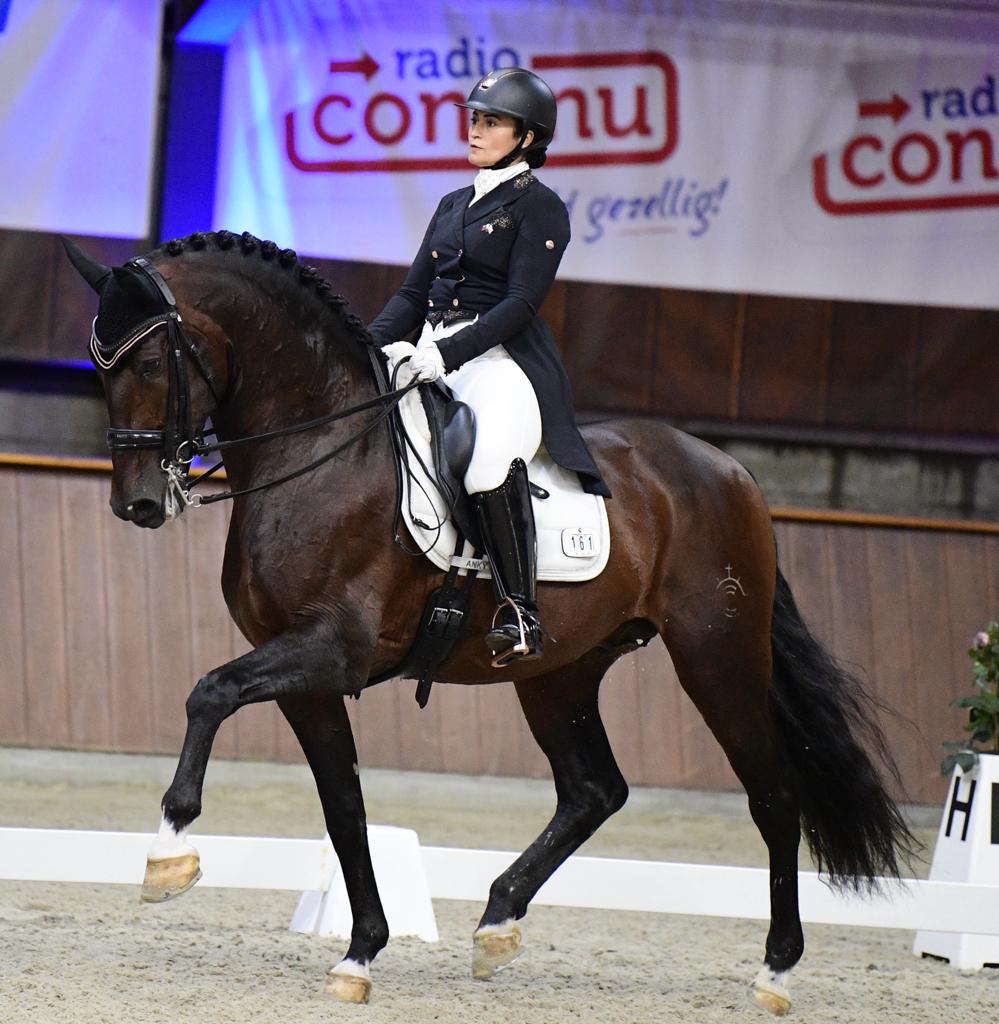
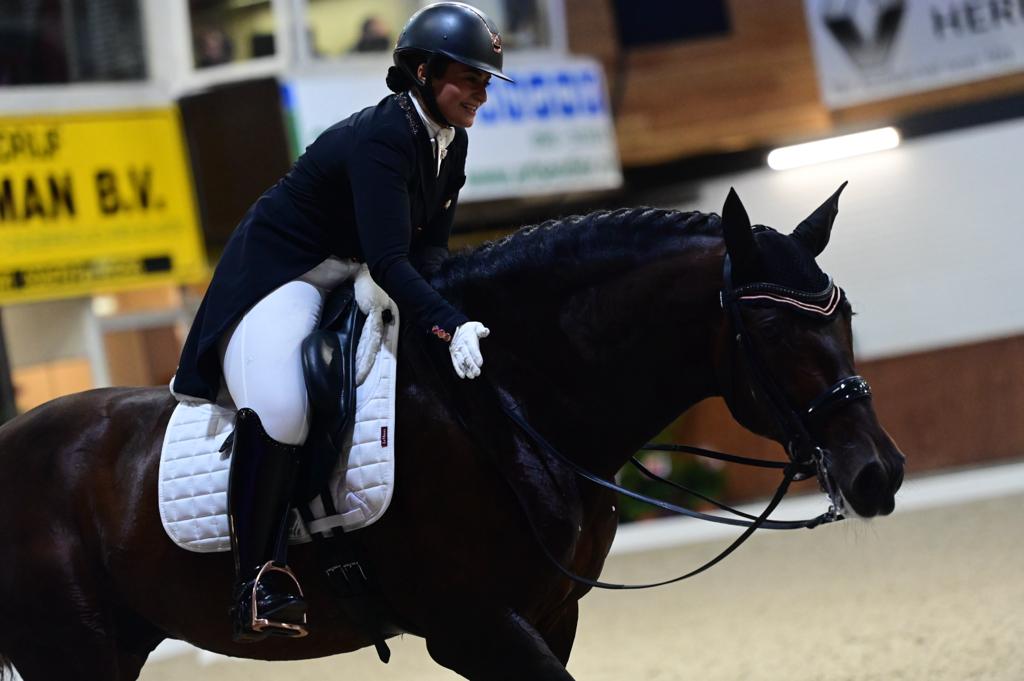


Every time a country hosts an international competition, out of diplomatic courtesy, a place is reserved for an athlete from the host country, known as the home place. When I qualified for it the first time, it was an accomplishment by itself, and people did not believe that I qualified. So, the invitation by Qatar shows that they know about me and my horses; it is like a testimony of our achievement.
Qatar has changed in terms of how it views dressage. There is a renewed interest in it now and you can see it in the way the Federation is investing in the national team that I am a member of. The national team consists of five members, but I am the only member who competes internationally, as of now, but I believe they will all be at the international level soon.
You have become a trainer recently, what inspired you to become a trainer?
I did not intentionally decide to become a trainer, even though I have been training others since I was 16. At first, I taught showjumping but then shifted to dressage when I was in Germany, as I changed paths myself. When I lost Jacaro, I came back to Doha to take some timeout and slowly received opportunities to train others.
I started with two horses and a couple of people who needed help with their horses. Those two horses are now winning competitions! After witnessing my success with those horses, many people started approaching me for training. Through that, I became a member of Dressage MENA (G7), and I was appointed as a technical expert by the International Equestrian Federation for the Emirates. I also judged some competitions, for example, in Kuwait.
Although I was doing things internationally, I kept my support for our local riders by training them. I am proud to see what our local athletes can do and how they are improving. I do have a passion for teaching, which is hard to do full-time now since I am an athlete too. However, if I ever retire from being an athlete, I will for sure become a full-time trainer, and maybe even have my own school!
As an athlete, how do you deal with setbacks?
I have been hospitalized five times since 2022, and as an athlete, every time you are down, you think to yourself how fast I can bounce back. However, the multiple surgeries I underwent taught me to take my time to heal and not to rush anything. I missed last year’s Asian Games because I had to have reconstructive surgery on my hand, which was a tough surgery. This is when you must rely on your faith in Allah, prayers, and your support system to get through it, because I would not have made it without them. Today, I am in a different mental state as I have come a long way and I managed to earn many achievements with my horses, who overcame a lot too. As an athlete, you just have to keep your spirits high!
What is your advice for women in Qatar?
Never give up on your dreams. You will be questioned a lot about your dreams, and you will face challenges when you follow them, but it is your dream. Nobody should stop you or take away your passion. It might be a lonely journey to go on, but when you are committed to making it, things will change for sure.
Related Interviews


Fatema Ahmad
Published 28/05/2025
- All Pictures were provided to us by the interviewee, unless stated otherwise.
- Interview was edited to improve clarity and readability.