Dr. Lulwa Abdullah Al-Misned
Former member of the Advisory Board
for the leaders of the GCC
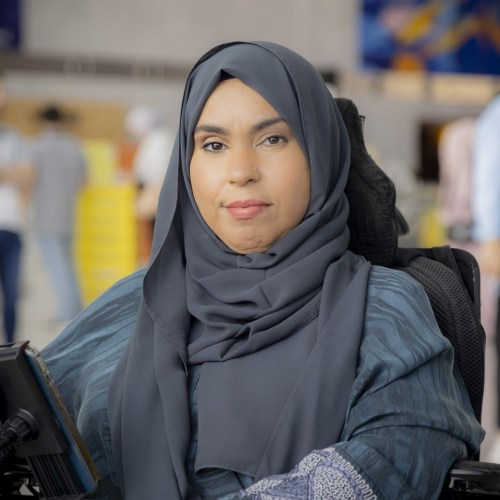
Dr. Lulwa Abdullah Al-Misned is a Qatari woman with an exceptional educational and professional background, a wife, and a proud mother. During her career, she worked in different positions and actively shared her knowledge with students as a professor at Qatar University (QU). She also has extensive experience in the field of industrial development and has a passion for writing. So, who is Dr. Lulwa Abdullah Al-Misned?

I am a Qatari woman and a mother of three sons and two daughters. I mention this information at the beginning because I see my work as a wife and a mother as my greatest contribution to my homeland. I lived in Qatar until the age of six, after which my family moved to Kuwait in the 1960s, so I completed my education there. After graduating from the university, I returned to Doha and joined the humanities research centre at QU. Later, I completed my master’s and doctorate degrees in the United States at George Washington University in the field of economics. After finishing the two degrees, I returned to work at QU, but this time as a faculty member. Moreover, I have a bachelor’s degree in law from Beirut Arab University (BAU) and I completed an internship at the Ministry of Justice to obtain a lawyer’s license.
I was nominated by the government of Qatar for a position in the Gulf Organization for Industrial Consulting (GOIC), an organization that belonged to the Gulf Cooperation Council (GCC) and was concerned with industrial development. I worked in that organization for 12 years until my retirement, after which I worked in the private sector. However, my work was not limited to these organizations and institutions, as I worked as an advisor in many committees, such as a committee concerned with family issues. I also volunteered in several committees that address social, family, and women’s issues, because I care about these issues and would like to contribute to solving them.
I am also a writer. I have always loved writing, and I have published several articles in magazines, including an online blog. I remember that the first magazine that published my work was Al-Ahed magazine.
- How was your life in Kuwait before returning to Doha?
I was living with my family in Al Khor before we migrated to Kuwait. In Al Khor, we lived in an open area that overlooked the sea. However, in Kuwait, we lived in the city and that was a challenging situation for me, but only at the beginning. With time, I got used to it.
However, the turning point in my life was when I became a university student in Kuwait. It was the first real opportunity for me to develop and discover myself. The university had many student clubs that encouraged debates. There were also student elections, and I met many international students who were studying with scholarships. This enriched the university environment with cultural diversity and you could sense it through the diverse conversations that were going on in the university. I also saw this diversity in their personal beliefs, which encouraged me to engage in conversations with the students. Such conversations led me to question my beliefs and to try to understand why I was thinking the way I did. That phase was like a journey inside myself, my thoughts, and the ideas I believed in. It led me to discover the gaps in my understanding of different topics, which would then encourage me to read and learn until I was convinced of the ideas I believed in. However, what I read about our history further solidified my beliefs and equipped me with the evidence and proof needed for any discussions.
- What inspired you to study and specialize in economics?
It wasn’t a well-thought-out decision. I initially wanted to study medicine, for which I would have had to travel abroad, but my father was against the idea. Once, during a conversation with someone, they mentioned that I seemed more suitable to study economics, and that’s how I made my choice.
I studied political economics at Kuwait University. Although the decision was made without much contemplation, I pursued higher education in it because I found it a practical subject. However, studying economics in America was a different experience compared to studying in Kuwait. America and the European countries are more advanced in their teaching methods and the way they approach economic issues. For instance, they rely on mathematical equations and laws instead of theories only. Unfortunately, I find that the teaching methods used in the Arab world, especially for scientific subjects, often make students dislike these subjects. It discourages them from pursuing further studies in scientific or mathematical fields. I fell in love with economics which encouraged me to pursue it even further because of the way it was taught in America.
In my master’s thesis, I discussed education as an investment with an emphasis on the economic returns of education. For my Ph.D. thesis, I studied public policies and the best practices to influence them, for example, the incentive policy and how we can impact individual decisions through them. I also looked into the best ways to design policies that encourage specific behavior from the public. By “public policies”, I don’t just mean those related to education or work, but policies in general, even those concerning housing or investment. My primary research focus was on the government housing program, examining the effectiveness of its current design and the best practices that can maximize its benefits.
I believe that studying economics helped me in other areas as well because it gave me the mathematical tools to scientifically measure the impact of social phenomena. This way, we studied and measured the impacts rather than relying on personal observations and opinions to analyse them. We can use the mathematical tools related to economics to design effective public policies that address various social issues in a scientific manner.
However, my learning journey hasn’t ended yet. I’m currently studying for a master’s in Arabic Literature from QU. I’m enjoying this experience, especially studying grammar, which is a challenging topic for students in school. However, I feel the issue was with the methods used to teach the subject, not the subject itself.
- How was your experience as a faculty member at QU?
I faced some challenges in finding a job after finishing my Ph.D. It wasn’t due to the lack of job opportunities, but rather because most of the working places were dominated by men, and they hesitated in hiring women. I had a short experience working in Al Doha magazine; I worked there for two weeks only. During my employment there, I worked on writing a report on the reasons behind the Ministry of Education stopping scholarships for female students to study abroad. During my research, I met many women who were negatively affected by this decision. After drafting the report, the magazine sent it to the Ministry of Education for review before publishing. To me, that was a breach of journalistic integrity. It would have been better to publish the report and allow the Ministry to respond as they saw fit. So, I decided to leave that work and find a job at QU.
I then joined the College of Business and Economics and worked there for 8 years, and during that time, I discovered my passion for teaching. Although I had previously avoided the role of an educator, teaching became a genuine pleasure for me, especially when I could directly see the impact I had on my students. In fact, I missed teaching when I moved to an administrative role. However, I preferred to leave teaching at QU because it was based on teaching theories only. Also, I believe that professors could serve as experts and consultants, and that’s what I wanted for myself, to have an influential role in the local economy. In my opinion, our universities should maintain a professional relationship with their former instructors and educators. Every educator has years of expertise, which shouldn’t be overlooked, even if they retire. They could still be a valuable resource for advice and consultation.
- What are some of the roles you had in the various positions and committees you participated in?
I served on the Advisory Board for the leaders of the GCC from 2007 to 2016. The primary role of this board was to propose solutions to specific issues, and these proposals were then passed to the GCC Ministerial Council. However, during a meeting with King Abdullah Al Saud, I suggested amending Article Five from the group of laws that governed the work of the Borad to allow it to make recommendations related to general policies. Given that we, as board members, were closer to understanding the concerns of the public, the King agreed and instructed the GCC Secretary-General to consult with other Supreme Council members about it. Even though Article Five wasn’t officially amended, the way we performed our work changed.
I also chaired a committee to address inflation in 2008 and another concerning individual income and the well-being of Gulf citizens. Representing Qatar, we were one of the biggest supporters of King Abdullah’s initiative to establish the Gulf Union. We were an active member of the Gulf Union Study Committee, where we presented studies and research papers and the components of such a union.
During my employment in GOIC, I was thinking about the best ways to work with my male colleagues considering that there weren’t a lot of women working in this field. However, over time, such challenges disappeared because I didn’t approach my work based on gender differences and established boundaries in our interactions, respecting myself foremost. Within the organization, I oversaw the industrial investment sector and economic policies. My responsibilities in this sector involved devising ways to improve and diversify industrial investment opportunities, conducting studies on the general economic policies of the Gulf countries, and addressing challenges facing the various industries within the Gulf states.
Moreover, I volunteered in many social initiatives. I chaired the technical committee for the first women’s conference under the supervision of Sheikha Moza bint Nasser in 1996, which discussed the challenges women face in balancing their roles in the workforce and their roles in the family. The conference later led to the establishment of the Supreme Council for Family Affairs, where I chaired its advisory committee. I’ve been involved in various other volunteer initiatives, which are too many to mention here.
- What inspired you to return to university and to pursue a master’s degree in Arabic Literature?
My love for writing drove me back to learning. For me, writing is how I communicate with myself and with others. I have used writing to process and solve many problems I have faced in my life. In the beginning, I was only writing for my pleasure, until 1973, when I published an article titled: “I Returned to My Homeland” coinciding with my family’s return to Qatar. Earlier, I had participated in a story-writing competition and won, further encouraging me to publish. During that period, women were encouraged to publish their writings and many of them did so under pseudonyms, but with my father’s support, I chose to publish under my name. The editor-in-chief of the Al-Ahd magazine approached me to write for them. I requested from him a column in the magazine that was titled “From My Window,” where I addressed social issues that concerned me. Despite my various job roles, I never stopped writing. However, it gradually evolved into more specialized and technical writing.
Now, I want to study literature to improve my writing. When I applied to QU, they first asked me to enroll in a foundational program on Arabic grammar. Even though I’m in the early stages of this new journey, I have learned a lot. I’ve been introduced to seminal works in literary criticism and literature in general, which I need to read and study. I am genuinely enjoying the program, not just for its academic value, but also because my classmates are the same age as my children. This provides an opportunity for us to exchange experiences. I’m not particularly interested in the degree itself. I’m here to learn.
- Have you faced any challenges during your journey?
I faced the most challenges when I tried to change any system. Any call for change is bound to meet some resistance. I am talking here about changes to improve, whether changing parts of culture, or common practices, but not changing what is ethically right. Changes will always face resistance because people prefer familiarity and what they’re used to. For instance, during my work in the GCC’s organization, I held the position of Deputy Secretary-General, which is an administrative role. My role was to just sign documents and pass them on to decision-makers. However, given my academic background, I felt obligated to review these official documents thoroughly before signing. Surprisingly, I found that they were filled with spelling mistakes and other major issues. Then, I would pinpoint and correct them but I made sure that these documents should be amended and verified before being escalated to the general secretariat, especially since those documents played a crucial role in planning policies.
Another example where I tried to change the way something is done, was when I wanted to understand the entire process that goes into launching an industrial project. I understand the policies and the economic impact on those projects, but I didn’t know on which basis they would choose the technologies needed to fulfil the project. So, I spoke to the director about the possibility of overseeing a project from its inception to its conclusion with the aid of experts. He agreed and I was allowed to supervise a project for producing plant-based gelatine capsules. The project was then sold at an investment seminar in one of the Gulf countries. The experience taught me so much and I learned things that helped me to perform my administrative role even better.
I always emphasize that even if you find yourself working in an environment that resists change and improvement you should still strive to make these changes. However, it is important to keep low expectations when it comes to others accepting change.
- What is your advice for women in Qatar?
Stay away from flashy slogans. It might shine but it’s not gold. Never say: “I can’t” because nothing is impossible with continuous hard work. When you want to make a change, start by changing your immediate surroundings, your home, and then the community around you. Always remember that every challenge is an opportunity to learn, and learning is a lifelong journey.
Related Posts


Fatema Ahmad
published 20/12/2023
- All Pictures were provided to us by the interviewee, unless stated otherwise.
- Interview was edited to improve clarity and readability.