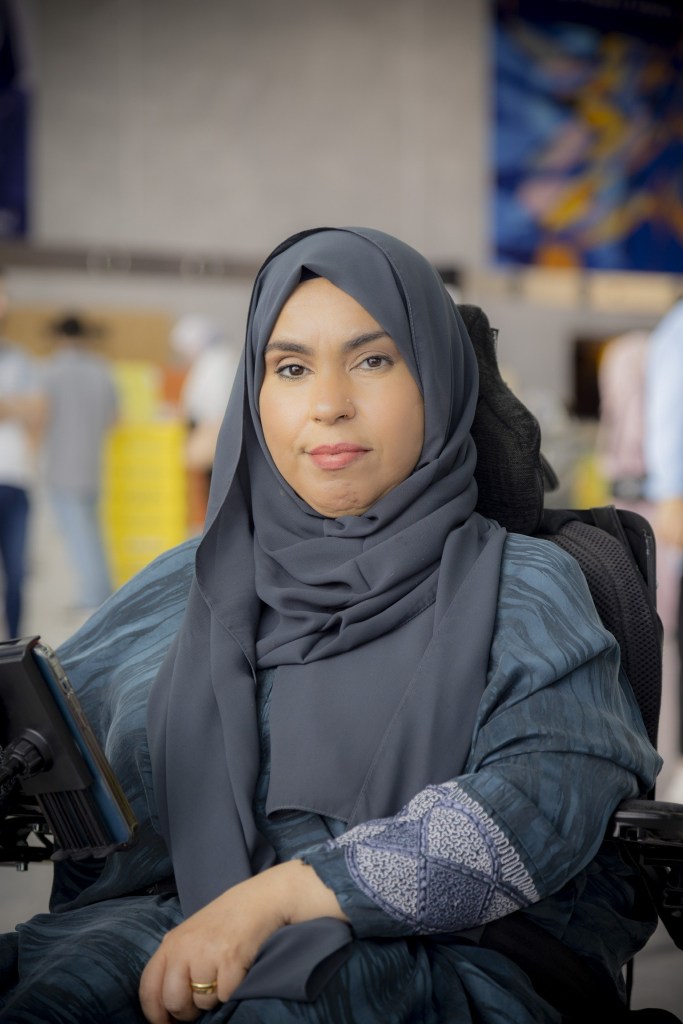
Maryam Abdullah Rashid Al-Sulaiti takes pride in being a person with different identities, a testimony to her success in adapting and coexisting with her health condition. She is a devoted wife, a loving mother, a productive employee, and a proud ambassador for “Accessible Qatar” initiative. Maryam strives to share with the community the activities and adventures she undertakes, aiming to highlight the challenges that individuals with special needs may face. So, who is Maryam Abdullah Rashid Al-Sulaiti?
Maryam is a person with many identities: I am a wife, a mother, an employee, and an ambassador for the “Accessible Qatar” initiative. I was chosen as an ambassador because I am a person with special needs diagnosed with muscular dystrophy. Also, I love to share with the community everything I do, from activities to adventures, so everyone can see the challenges that a person with special needs might face.
How has your journey been so far?
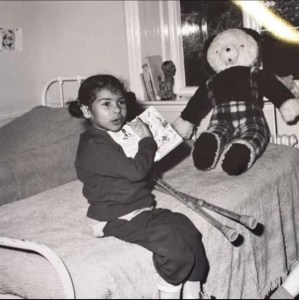
I was a child in the seventies, and back then, we lacked the necessary expertise in Qatar to diagnose my health condition. One of my conditions is that I couldn’t walk even after I turned two, among other symptoms. I traveled to Britain for diagnosis and treatment, where I was diagnosed with muscular dystrophy. I had to live in UK for some time to receive physiotherapy. I was initially admitted to a nursing home for the elderly, where I lived till I was six. At 11 years old, I left Saint Mary’s, however, I continued to travel back and forth between Qatar and Britain/UK for my treatment until I became 14.
After settling in Qatar, I found it difficult to communicate in Arabic, and unfortunately, I couldn’t join any school in Qatar, because the schools weren’t equipped for students with special needs. My sister taught me to read and write in Arabic. I had the will to learn, so I studied from my nieces and nephews’ books, read children’s stories, and then progressed to reading newspapers. Later, I had to be hospitalized for health reasons and stayed at the hospital for five years, visiting my family during vacations. During my stay at the hospital, my educational level was assessed and based on the fact that I was enrolled in the third grade as a homeschool student. Thankfully, my health stabilized, and I returned to my family’s house at eighteen. I remained unemployed for a while and later decided to look for a job to be more independent. After years of working, I got married and became a mother.
How was your experience at work?
I was happy when I got a job, but after a week of working, I faced some issues at the workplace since it was not accessible for people with special needs. I believe that people with special needs want to be active members of society, experience life in all its aspects, and live independently, and they can do so. All we need is some understanding of our needs. At that job, I insisted on coming to the workplace, and thankfully, they accommodated the workplace to suit me.
In 2021, you nominated yourself for the Shura Council. What was your experience like?
I decided to nominate myself for the Shura Council to be an active part of the society, especially as a woman with special needs. So, I can share my unique experience with the community and be a voice for people like me. The government and the media strongly supported me; I did several interviews with various newspapers. Regardless of not winning a seat in the council, it was a beautiful experience, and I am proud of it.
Have you noticed any changes in society regarding the rights of people with special needs?
Certainly, things are much better, and the acceptance of differences within society has improved, but we still have a lot to improve. For me, one of the most important areas that needs improvement is increasing awareness in schools. We also need to educate the parents and families of people with special needs. Essentially, teaching parents how to raise their child with special needs, and to understand the challenges their child will face in the future. They also need to prepare the child to learn about their challenges and how to live with them, and to know the appropriate ways to minimize the impact of these challenges. Awareness should also be spread through social media platforms.
Have you faced any challenges during your journey?
My plan when faced with challenges is to never give up. For example, I have a lazy eye, making it difficult for me to learn through reading, so I started listening to audio materials. I faced some challenges moving from Britain and settling in Qatar, as my Arabic was not good. I had an independent and social life in Britain because the school took us on trips, and we were part of the scout girls, etc., and I missed all that in Qatar. To be honest, my life in Britain is what prepared me for an independent life. However, my biggest challenge was marriage, which came with a new range of difficulties and many negative and worrying comments about my future, which I overcame. I have one son who has autism, and a daughter diagnosed with Attention Deficit Hyperactivity Disorder (ADHD), and raising them comes with different challenges, but I face all this with patience and perseverance.
What is your advice for women in Qatar?
Persevere and do not give up. Set a goal for yourself and head towards it with all your strength, even if you need to pause and take a breather. I advise the mothers of children with special needs to learn about your child’s condition and educate yourself about it. Learn about your child’s weaknesses and strengths, live life with them, and prepare together for a life that is going to be different from their peers. Allah blessed you with a special child because he knows you are capable of taking care of them.