Sheikha Dr. Asma Ali Al Thani
The Founding Dean
of the College of Health Sciences at Qatar University
Qatari women have made great leaps in various scientific fields. As Qataris, we are very fortunate to have inspiring Qatari women in many different fields; women who have trail-blazed and left their fingerprints in their field. In this interview, we will be focusing on the health and science field by exploring the life of Dr. Asma Ali Al-Thani, the founding Dean of the College of Health Sciences at Qatar University, Director of the Biomedical Research Center, Vice Chairperson of the Qatar Biobank Board of Trustees, and Chairperson of the National Qatar Genome Committee. So, who is Dr. Asma Ali Al Thani?
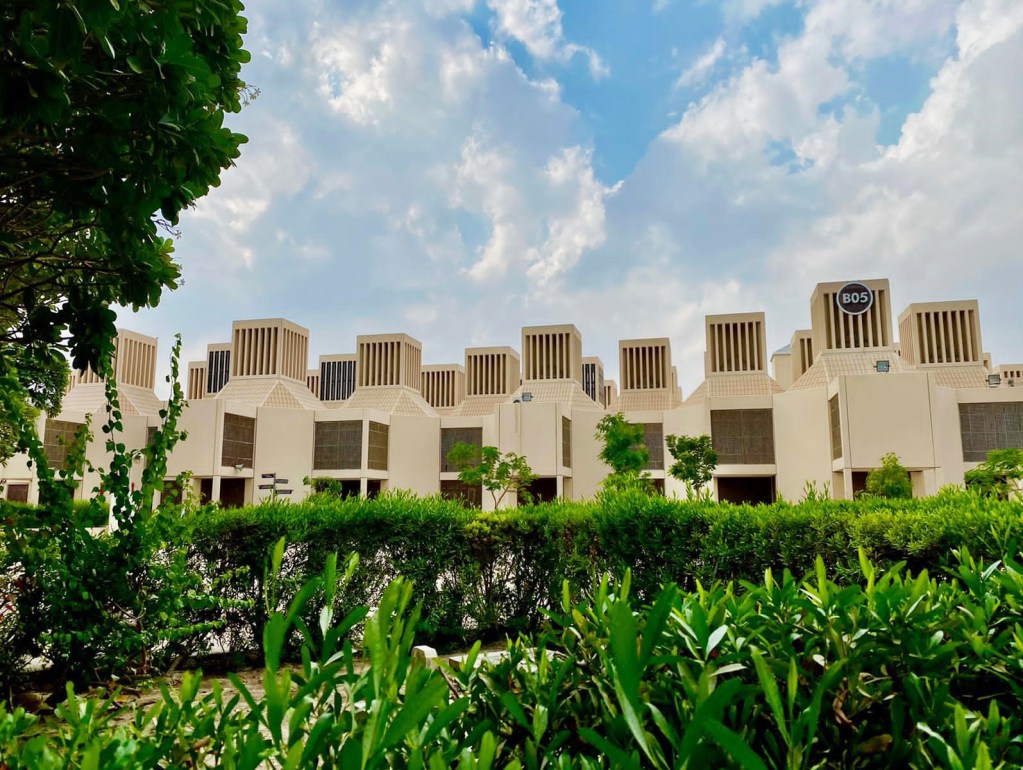
I graduated from Qatar University (QU) in 1990 with a double major in Analytical Chemistry and Biomedical Sciences. After graduating, I worked as a teaching assistant at QU for a couple of years and then traveleded to the United Kingdom (UK) to complete my postgraduate studies at The London School of Hygiene & Tropical Medicine, which is the medical branch of the University of London, and I specialized in Medical Virology. Once I graduated, I returned to QU to work as an assistant professor.
I have been climbing the career ladder since I got appointed at QU in 2005. In 2012, I became the Head of the Health Sciences department, and then the Founding Dean of the College of Health Sciences. During this time, I was a member of many national committees, including the National Committee for Human Research at the level of the Ministry of Health. The aim of this Committee is to monitor research institutions, particularly those that use samples from humans to preserve the rights of patients and volunteers. For example, we make sure that the institute has consent from the donor. Another concern is how such institutions treat vulnerable groups, such as prisoners, children, pregnant women, and others. We make sure that whatever research is carried out is done ethically and does not pose any harm to the people involved. Furthermore, in 2006, I became a member of the executive committee of Qatar Foundation’s Qatar Biobank.
When I was appointed as Head of the Health Sciences Department, there were only three health and medical majors offered at QU: biomedical sciences, human nutrition, and pharmaceutical studies. At the same time, QU made the decision to expand the medical majors it offered, and I was appointed a member of the founding committee that was formed by Her Excellency, Dr. Sheikha Al Misned, the former dean of QU, alongside His Excellency Sheikh Dr. Abdulla Ali Al Thani, Her Excellency Dr. Hanan Al Kuwari, Dr. Mariam Abdulmalik, and Sheikh Dr. Hassan Ali Al Thani. We began with establishing the College of Medicine, and then we established the College of Health Sciences and Physical Therapy Department.
During the same year, we have also taken steps towards having several postgraduate programs, such as a master’s in medical sciences, a master’s in public health, a master’s in Genetic Counselling, and a PhD program in Biomedical Sciences. All these health-related programs, which are related to the Colleges of Health Sciences and Pharmacy, are offered for women only due to the lack of facilities. However, we hope to open them soon for male students also.
One of the most important projects we have carried out in 2018 is the “Medical Cluster” project, where we combined first-year students majoring in health and medicine. Before, first-year students used to be divided between the three colleges based on their medical tracks, but this made it difficult to move between the colleges. Therefore, we have started joint or interdisciplinary education where all students learn medical and health specialties together in the first year, the foundation year.
- Have you always wanted to specialize in health and biomedical studies?
Yes, I have always known that I wanted to specialize in sciences, for they have an important and significant impact on society. Of course, all sciences and disciplines have their distinguished and unique role in society, but I chose health for two reasons: first, I used to feel inclined to natural science subjects, particularly biology. Secondly, there is a Qur’anic verse that has always stood for me, it reads: “Only those fear Allah, from among His servants, who have knowledge.”This verse made me wonder why are the ones who seek knowledge considered to have the deepest faith? And the answer came to me that they see the greatness of God’s creation. I believe that this verse applies perfectly to biology. When we look at virology, for example, we see that viruses are extremely small organisms that cannot even live without occupying the body of another being. Yet, their effect on humans is very significant for example, a flu caused the death of 20 to 40 million people. This is more than the number of deaths caused by World War I and World War II put together.
Viruses are indeed very strange organisms. This is the reason why I have decided to specialize in virology. It is a very large field of study due to the fact that these organisms, which do not have a habitat even through an electron microscope, change and evolve over time. I got to witness this myself when two of my siblings had poliomyelitis, which is often called polio or infantile paralysis, even though they were exposed to the same environment as me and my other siblings. Therefore, I came to wonder: what is the reason behind their sickness and why did they overcome that virus? Some attribute that to the differences between viruses themselves. But I think that the most important factor in this respect is how vulnerable a certain person is, the possibility of his or her contracting a certain virus and their being easily attacked by viruses. This is the idea that I’m trying to prove in my research to this very day. On this basis, my research focuses on the causes of the emergence of diseases and viral epidemics, and through this research I can study how the survival methods of viruses evolve and develop and how they attack people and cause their death.
- Could you tell us more about the Qatar Biobank project?
Qatar Biobank is a population research project where we collect biological samples and demographic information (social and economic) of the Qatari population to create an archive that will contribute to future research initiatives. Volunteers must be adults, whether Qatari or a resident who have lived in Qatar for more than 15 years, because they have been exposed to the same environment. The sampling process usually takes three hours, during which we collect three types of samples, and conduct various tests. These tests include eye examination, respiratory examination, and bone densitometry. Then, we conduct a comprehensive questionnaire on their health, their social status, family medical history, as well as his or her eating and sleeping habits. After about a month following the examination, we contact the volunteers to give them the results of the tests and inform them of steps they should take if the tests show any concerning results.
Qatar Biobank is a platform for scientists to facilitate their research. In 2018, we had about 100 researchers with access to the data collected in their research and publications. Scientists must pay certain fees to allow them to use such data and samples, whereas students are exempted from such fees to encourage them to conduct further research.
What about Qatar Genome Project?
Qatar Genome was founded in 2018 by Her Highness Sheikha Moza Al-Misned. The aim of this project is to collect genetic data and to put it in a chip to establish a sophisticated medical diagnostic system. Currently, there are eight thousand cases on this chip, including some of the cases that Hamad Hospital was unable to diagnose. It also contains discoveries made by Weil Cornell University in Qatar, Sidra Medicine (Hospital), and other research institutions. This project is intended to collect medical data of and for the people of Qatar, and we have called it “Qatar Chip.”
This information can be used for premarital screening and for screening newborns to ensure that the best service is being provided to maintain the health of the citizens. We often find that hospitals in Qatar can diagnose certain symptoms that were not seen before in hospitals outside of Qatar and the region. This is because their tests are based on the medical and genetic data of the population and citizens of their own country. For this reason, it is important that we collect all this data on the medical history of the population of Qatar and develop the field of medicine for our benefit.
One of the things we are currently working on is the personal genome report. This report presents a detailed medical diagnosis based on a person’s genetic code. This way the relevant person will be aware of the types of food he or she must avoid, in addition to other important factors that help their health. However, such reports can cause a lot of stress for people. This is why we have established a genetic counselling program that assesses the status or case of a person and prepares them for getting their report and the results of the genetic testing. These projects are classified as a kind of preventive medicine as we seek to find a way to prevent diseases before an outbreak.
- Could you tell us more about the initiatives you made to attract students to this field?
When I was still studying, the percentage of Qatari women in medicine was over 80%. However, over time, women have had the opportunity to study other fields leading to a decrease in the percentage of Qatari women in health majors. This is why we started several initiatives to garner interest in the field of medicine. For example, we have collaborated with sponsors, like Sidra Hospital and other hospitals, to secure the students a job after graduation. For young girls, we have started a program called Seha. The goal of the program is to introduce high school students to health-related programs offered at QU. As for boys of the same age, we have created a special program for them on various local birds, such as the falcon, and it mainly focuses on biology and scientific classification.
- How do you manage your time between all of these projects?
That is not easy as I am a mother of four children, and I have come to the realization that the period in which a woman can excel and establish a career, is also the same period at which she is expected to get married and have a family. Even when I worked in the West, I came to notice that men are able to excel faster due to the fact that they do not carry the same responsibilities as women do, such as pregnancy. So, it is not easy to maintain the balance in this respect, particularly if you come from a conservative family and, of course, you do not want to displease anyone.
In this matter, I consult my religion, because customs and traditions change over time, but religion will always remain consistent. I also am very thankful that we as Qataris, in my opinion, have a harmony between our religion and our customs and culture. We have always been known for maintaining a balance between tradition and modernity. So, if religion allows me to do something, why would I refrain from doing it? It is also important that your husband and family are supportive. I was lucky because I had the support and help of my husband’s family when I was studying abroad. Whenever I needed to go out for a certain purpose, I felt reassured that my children were in good hands.
As for managing projects, there are some steps that I have taken to help. Firstly, I must set priorities. Secondly, I do not postpone anything that I must do, otherwise the work will pile up. In this, I follow the hadith of our prophet: “Take (benefit from) five before (the occurrence of) five: Your youth before old age; and your health before sickness; and your wealth before poverty; and your free time before pre-occupation; and your life before death.” (Mustadrak al-Hakim, 7846 / 7915). Thirdly, I make sure to appoint capable and efficient staff. The staff might disagree with me on certain points, but you should prioritize the quality of the work over your own interest. For example, if someone came up with a better idea than mine, I would welcome it rather than try to impose my own opinion. I actually like people who are critical because they motivate me to improve my work. Of course, it is important to employ someone you trust, but this trust must be based on efficiency rather than blind support.
You have passed through many different roles in your career, is there a specific role that stands out for you?
I enjoy being a researcher and not just a teacher. Sometimes the students themselves will ask questions that challenge my thinking, and it forces me to learn new things and stay updated.
- What is your advice for women in Qatar?
Be patient. Nothing in life worth having comes easy. Pursue your goals and take advantage of any opportunity. Take the initiative and attend lectures not related to your field, so you build good connections with people outside your field. Remember, life offers both ease and hardship, as Allah Almighty says: (Allah does not charge a soul except [with that within] its capacity) (Al Baqarah, 286, Sahih International). Do not try to please people, just make sure to please Allah first.
Related Interviews


Fatima AL Naimi
Updated on 11/24/2024
- All Pictures were provided to us by the interviewee, unless stated otherwise.
- Interview was edited to improve clarity and readability.